


### Blog Post:
Whole home battery backup is no longer a fringe concept—it’s a decision-grade investment opportunity for American homeowners facing real blackout risks and rising energy costs in 2026. In this guide, get hard evidence, cost breakdowns, and actionable steps so you can make a sound buying choice—whether you’re leaning toward batteries, generators, or a hybrid.
Key Takeaways
- Installed home battery costs vary widely in the U.S., averaging $700–$1,250 per kWh, with total bills for full-home systems usually between $10,000 and $20,000—including soft costs and upgrades.
- A typical system (10–14 kWh, average ≈ 12 kWh) may not cover your entire house for long outages—so matching size to your needs is critical.
- Batteries are often cheaper long-term than generators when you factor in 15 years of fuel and maintenance, but most systems require careful vendor selection to avoid permit delays and warranty pitfalls.
- Quick Market Snapshot — Is now the moment for whole home battery backup?
- Typical system size and what it actually runs (how many kWh do you need?)
- Home battery storage cost 2026 — national and regional installed $/kWh breakdown
- Real out-the-door price expectations and what vendors omit
- Battery backup vs generator cost — total lifecycle comparison (15-year view)
- Performance and longevity — degradation, warranties, and realistic runtime guarantees
- Grid-forming vs grid-supporting: what specs actually mean for blackout resilience
- Top consumer complaints and how to avoid them
- Installer reality check — timelines, quotes, and negotiating transparency
- When a solar battery without solar panels makes sense
- Top 3 coverage gaps competitors miss (and the exact facts you must include in your offer)
- Practical buying checklist — exact questions to demand from vendors and contract language to insist on
- Quick decision guide: buy now, wait, or hybrid strategy (battery + generator)
- FAQ block — short answers to the questions readers will search next
- Next steps and call to action (for conversion)
Quick Market Snapshot — Is now the moment for whole home battery backup?
U.S. demand for whole home battery backup has soared since 2024. Adoption rates doubled from about 1.5% of single-family homes in 2024 to roughly 3% by the end of 2026, thanks to massive Q1-2026 momentum, which added 673 megawatts of new residential capacity. The U.S. home battery market is expected to hit $4.9 billion in 2026 (source).
This means: more installer options, more proven brands, and slightly shorter waitlists versus even two years ago. However, not all systems or quotes are equal, and market maturity does not erase the risks from hidden costs or installation bottlenecks.

Typical system size and what it actually runs (how many kWh do you need?)
The vast majority of home batteries in 2026 are sized between 10 and 14 kWh (average ≈ 12 kWh, per EnergySage data). This is enough to run your “essential circuits” (lighting, refrigerator, internet, and some plugs), but not the whole home for extended outages. Air conditioning and electric water heating can rapidly drain a standard battery. Most consumers’ number-one complaint: batteries running out during long blackouts due to undersizing or optimistic load assumptions.
If your outage risk is high or you want to power HVAC or medical devices, work with your installer (see our detailed home battery storage cost 2026 guide) to size for realistic—not just best-case—scenarios.
Home battery storage cost 2026 — national and regional installed $/kWh breakdown
Installed costs for home batteries in 2026 range from about $700 per kWh in Texas to $1,250 per kWh in the Northeast (California ≈ $1,070/kWh, Texas ≈ $720/kWh, Mid-Atlantic ≈ $1,200/kWh) (VIP Energy Service, EnergySage).
What’s included in these numbers? Hardware, inverters and balance-of-system, labor, permitting, utility interconnection, and installer margin. Soft costs can easily make up 40–60% of your bill. Regional labor rates, permitting rules, and grid interconnection complexity cause most of the price spread—not the battery pack itself.
For live, region-specific pricing in your zip, check the 2026 Home Battery Storage Cost report.
Real out-the-door price expectations and what vendors omit
Translating $/kWh to total installed price: a typical 12 kWh full-home backup system will cost $10,000 to $20,000 installed, depending on your region, labor, and required upgrades. Always demand an itemized quote—battery hardware is only 40–60% of that sticker price.
Commonly omitted or “soft” costs:
- Permitting and interconnection fees
- Panel or electrical service upgrades (often required!)
- Sales tax, disposal of old equipment, or contingency markup
- Hidden dealer mark-ups and change orders
Some installers still bury these line items, so ask for full transparency before signing anything.
Battery backup vs generator cost — total lifecycle comparison (15-year view)
Let’s compare apples to apples: upfront and total ownership costs over a decade-plus.
| 12kWh Battery | 12kW Standby Generator | |
|---|---|---|
| Upfront Cost | $15,000 (installed) | $3,000–$10,000 (installed) |
| Operating (Fuel, Yearly) | $0 | $500–$800 |
| Maintenance (15 Yr) | Minimal | $5,000–$8,000 |
| Expected Life | 10–15 Years | 10–15 Years |
| Total 15-Yr Cost | $15,000–$18,000 | $10,000–$12,000 |
| Noise/Fumes | Silent/None | Loud/CO Risk |
| Emissions | Zero | High (fossil) |
| Blackout Runtime | Limited by kWh (typically 8–36 hrs) | As long as fuel lasts |
Key callout: In many regions, a battery can cost less than a generator over 15 years, especially factoring zero-fuel cost and service. But batteries are limited by capacity—once depleted, you wait for grid restoration or sunshine (full analysis).
If you want rock-solid multi-day backup and don’t want to oversize your battery system far beyond average, consider a hybrid (smaller battery plus generator) for the best of both.
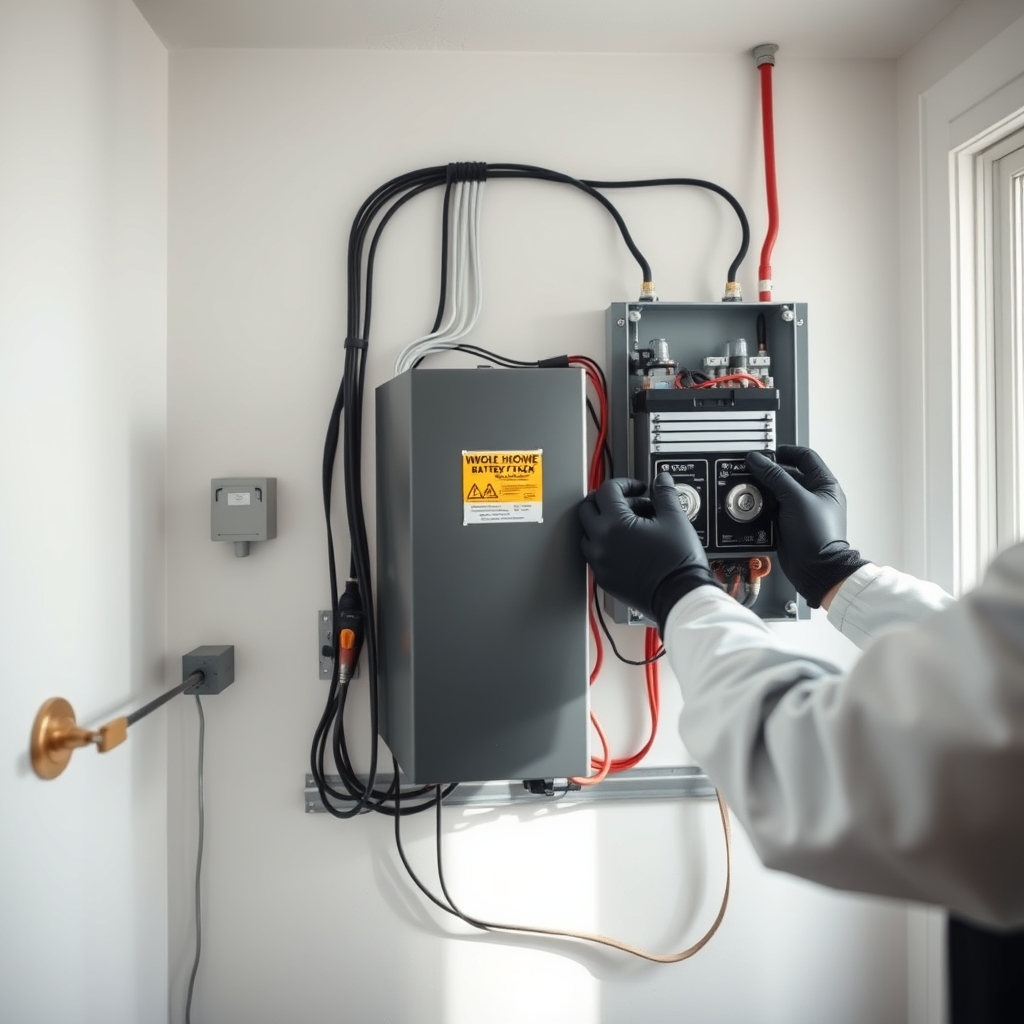
Performance and longevity — degradation, warranties, and realistic runtime guarantees
No battery is immune to time. Expect roughly 5–10% capacity fade after five years of typical use, and warranties that promise either 10 years or 70% remaining capacity by year ten. Unlike generators, which last as long as they’re serviced, battery runtime always shrinks over time and can be affected by temperature, cycling, and even software updates.
Manufacturers can be strict on warranty claims. Get all terms in writing—including capacity, cycle count, and transfer terms if you sell your home. Take weekly runtime logs during outages for your file—the only way to back up a claim.
Grid-forming vs grid-supporting: what specs actually mean for blackout resilience
A poorly understood spec could make or break your blackout coverage. Most residential whole home battery backup systems are grid-supporting: they can supply power when the grid is available or quickly restored, but can’t restart your home’s power (“islanding”) independently unless you pay for an optional grid-forming capability or other hardware. Without grid-forming, you may be left in the dark during a true outage. Always check which capability you’re buying, because “whole home” doesn’t always mean “your whole house will work, even if the grid is totally down”.
Top consumer complaints and how to avoid them
Based on recent installation data and thousands of reviews, here are the most common buyer pain points—and how to sidestep them:
- Battery runout during long blackouts: Usually due to undersizing or not fully vetting your real loads. Fix: Demand a load profile from your installer—and upsize if your budget allows.
- Capacity fade after 5 years: About 5–10% reduction is common. Fix: Ask for the exact cycle and year limits in writing.
- Warranty confusion or denials: Many are 10 years or only guarantee 70% capacity, with claim hurdles. Fix: Get warranty terms (and process) in your contract.
- Hidden soft costs: Permitting, interconnection, and dealer markup can add $2,000–$5,000. Fix: Demand an itemized quote, including all soft costs, before signing.
- Installer delays: Install windows now average 8–12 weeks or more. Fix: Ask for a milestone timeline tied to your payment schedule.
To avoid these issues, check installation timelines and itemized costs, and consider only vendors with proven local reviews (home battery installer near me tips).
Installer reality check — timelines, quotes, and negotiating transparency
Typical homeowners face a 6–10 week permitting window, then 2–4 weeks for installation. In practice, many installs stretch to 8–12 weeks from deposit to commissioning. Quotes should break out:
- Battery/inverter hardware (spec model & size)
- Labor and electrician fees
- Permitting and inspection charges
- Panel/interconnection upgrades (detailed if needed)
- Milestone dates for each phase
Red flags: vague “out the door” pricing, omission of soft costs, guarantees that sound too fast, and lack of itemized terms. Search “home battery installer near me” but always interview at least three established, reviewed providers in your area. See our resource for detailed installer vetting steps.
When a solar battery without solar panels makes sense
You do not need solar panels to use a home battery for resilience. Many households install backup batteries alone, either for grid-outage peace of mind or in anticipation of adding solar later. Just know:
- Some batteries (and local codes) require “solar-ready” compatible inverters—ask before choosing hardware.
- Without solar panels, you cannot recharge during an outage; the battery is solely a blackout buffer. Time-of-use rate arbitrage is often limited for battery-only setups, but backup functionality is fully supported.
- Permitting is similar to battery-plus-solar in most top markets—costs are not significantly lower unless you’re avoiding a main panel upgrade.
Popular reasons for “solar battery without solar panels” installs: planned future PV additions, backup-only resilience in apartments or shaded roofs, and homeowners taking advantage of rebates now for later use (reference).
Top 3 coverage gaps competitors miss (and the exact facts you must include in your offer)
- Lifecycle cost clarity: Over a 15-year timeline, a 12 kWh battery ($15,000 installed, no fuel, 10–15 years of life) is commonly cheaper than a standby generator ($3,000–$10,000 upfront, plus $500–$800/year in fuel and maintenance).
- True grid-forming spec disclosure: Most residential batteries are grid-supporting only—they cannot control voltage or frequency in islanded operation unless you pay for extra inverter hardware. This is rarely explained upfront.
- Full transparency on permit/install timing and all-in pricing: Most installer quotes are $10,000–$20,000 for full-home battery installs, but soft costs and delays (6–10 week permit windows, 2–4 week install) are often omitted or glossed over.
Practical buying checklist — exact questions to demand from vendors and contract language to insist on
- What is the total system size (in kWh), and is that the usable (after inverter losses) figure? (Typical system: 10–14 kWh, average ≈ 12 kWh.)
- What is the continuous and peak output power (kW), and can it support your largest essential load?
- Does the quote include grid-forming capability for islanded backup, or is extra hardware needed?
- What is the warranty period and percent capacity guaranteed at end of term? (Typical: 10 years or 70% capacity, get it in writing.)
- Is the warranty transferable if you sell your home?
- Does the quote specify all permits, interconnection, and labor costs in itemized form?
- What is the expected timeline from contract to commissioning, with key milestones and penalties for slippage?
Print this checklist and use it to structure all calls, visits, and proposal reviews. For more help, check out our in-depth resource: home battery installer near me.
Quick decision guide: buy now, wait, or hybrid strategy (battery + generator)
Should you buy a whole home battery backup now, wait, or go hybrid? Here’s a quick framework:
- Outage frequency and risk: Frequent outages (2–3+/year) favor buying now; rare blackouts may justify waiting or choosing partial backup only.
- Budget: $8,000–$25,000 is realistic for full or partial home battery backup. If that stretches you, lean toward essential-only circuits or delay until incentives improve.
- Maintenance appetite: If you want zero-fuel, almost no maintenance, and silent operation, battery wins. If you want unlimited runtime for hurricanes or ice storms, a hybrid (small battery plus generator) can deliver both quick/clean and deep/extended backup at a total installed price often under $25,000.
- Timeline urgency: Need a solution before this winter’s risk? Lock your place in the installer queue before seasonal surges begin—total project times are still 8–12 weeks on average.
Key point: Batteries often show better economics than generators over 15 years when you factor fuel and maintenance ($15,000 vs $10,000–$12,000 with $500–$800/year extra), but every home is unique.
FAQ block — short answers to the questions readers will search next
How long will a 12 kWh battery run my home?
For essential loads (fridge, lights, internet), a 12 kWh battery will generally last 8–36 hours depending on usage. Running heat pumps or central AC can reduce this to just a few hours. Sizing and actual use are critical—oversize if you need longer blackout protection.
Are battery warranties worth it?
Yes—most are 10 years or guarantee 70% capacity. But read the terms carefully; warranty claims can be denied for improper install, abuse, or exceeding cycle limits. Always get warranty documentation in writing.
Can I install a solar battery without solar panels?
Yes—you can install a “solar battery” for backup only and add panels later. This setup is increasingly common for resilience alone. Make sure the proposed inverter and electrical code requirements support future PV if you plan to expand.
How long until my home battery backup is installed?
Installer timelines are generally 8–12 weeks from deposit to commissioning—6–10 weeks for permitting and utility signoff, then 2–4 weeks for hardware delivery and installation.
How can I find a reputable home battery installer near me?
Interview at least three locally reviewed installers, ask for customer references, and demand a fully itemized proposal (include permits, labor, interconnection). Use our guide to the best home battery installer near me for up-to-date tips.
Next steps and call to action (for conversion)
If you’re serious about a whole home battery backup, take these steps:
- Request itemized quotes from at least three vetted local installers, using the checklist above to ensure all line items are included.
- Ask directly about permit, interconnection fees, and milestone timelines—and get everything in writing.
- Run a simple “load profile” with your installer—or use a plug-level meter—to confirm you’re buying enough kWh for your home’s real needs.
- Compare all proposals against current market averages ($10,000–$20,000 for a whole home battery backup, with a 6–10 week permit window and 2–4 week install timeline).
Make your resilience investment with open eyes and a clear contract—avoid surprises, and enjoy peace of mind before the next major outage.
—